
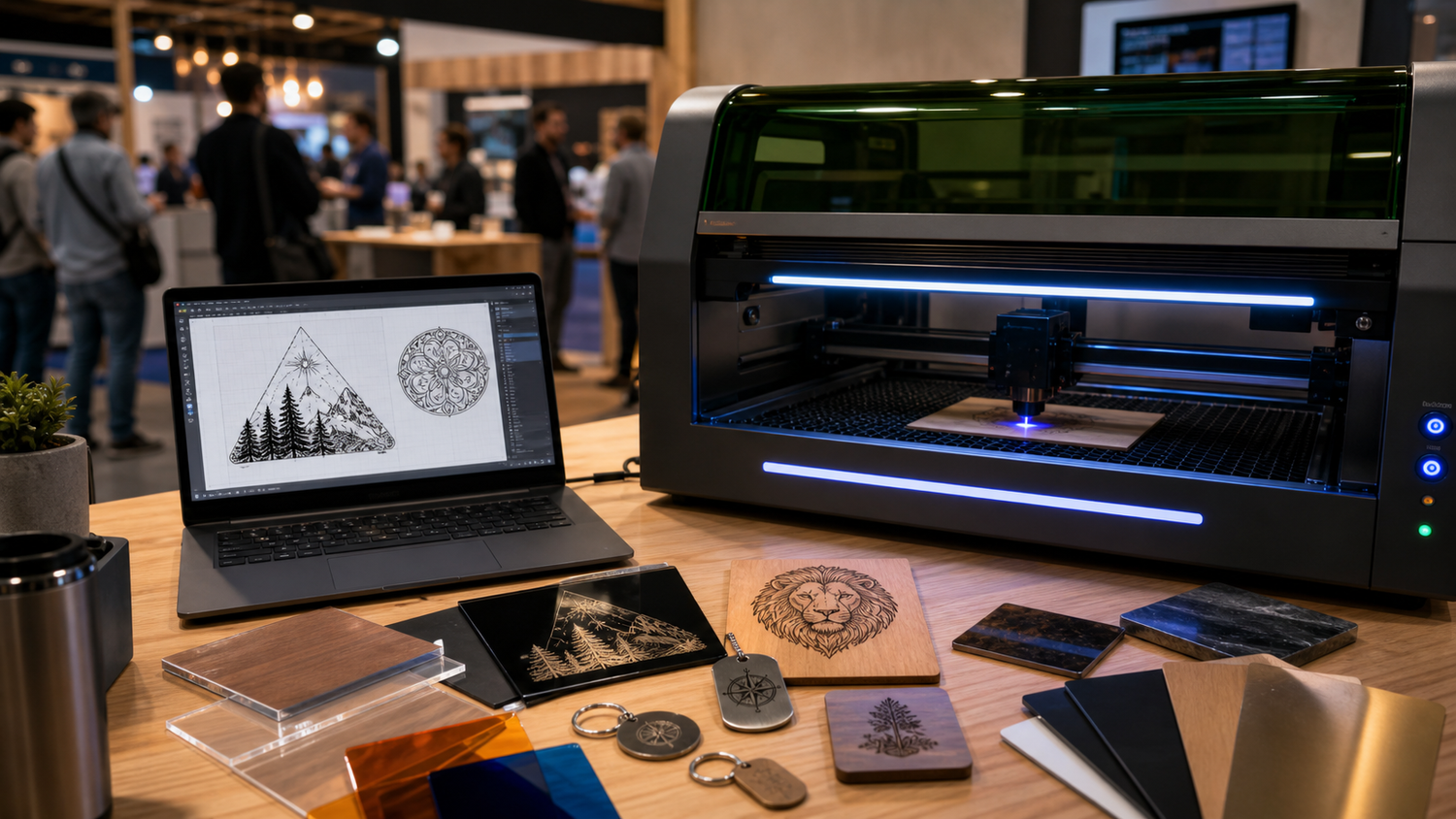
Le notizie sull’incisione laser di luglio 2026 evidenziano tre chiari segnali di acquisto: il software sta diventando un fattore di differenziazione sempre maggiore, il posizionamento ibrido metallo-più-non-metallo sta accelerando e il crowdfunding premia ancora i dispositivi di ingresso compatti che abbassano la barriera per iniziare.
Riepilogo veloce
- xTool sta ancora promuovendo la narrativa dell’innovazione a più alta visibilità, abbinando la messaggistica del flusso di lavoro AI con un posizionamento più ampio di produzione creativa.
- LaserPecker si sta orientando verso la maturità del software, con un flusso di lavoro PC più capace per progetti più grandi e complessi.
- LightBurn rimane il punto di riferimento del software di controllo da tenere d'occhio, con le principali funzionalità 2.1 seguite da rapidi rilasci di patch.
- GWEIKE sta enfatizzando la funzionalità desktop ibrida, in particolare per i negozi che desiderano stampe sia metalliche che non metalliche da un'unica workstation.
- Kickstarter mostra ancora un forte interesse in entrambe le estremità del mercato: incisori principianti ultracompatti e macchine ibride più grandi.
Aggiornamenti del marchio e della piattaforma
xTool: l'intelligenza artificiale si sta spostando dal livello del marketing al livello del flusso di lavoro
Al CES 2026, xTool ha detto che avrebbe introdotto AImake, descritto come un agente di creazione di intelligenza artificiale progettato per aiutare gli utenti a passare dal perfezionamento dell'idea e del progetto alla fabbricazione. Per gli acquirenti, questo è importante perché i marchi laser di consumo più forti non competono più solo sulla potenza, sulla velocità o sul design della custodia. Sono sempre più competitivi sulla qualità del flusso di lavoro dalla progettazione all'output e sulla rapidità con cui i nuovi utenti possono passare dall'ispirazione al prodotto finito.
Fonte: PR Newswire xTool versione CES 2026
LaserPecker: le prestazioni del software stanno diventando un punto di forza
Su 28 febbraio 2026, ha annunciato LaserPecker LaserPecker Design Space Beta (PC 3.0), sincronizzato con un aggiornamento del firmware e inizialmente ottimizzato per LX2. L'azienda ha evidenziato un rendering più veloce, un minore utilizzo della memoria, una gestione più efficace per progetti grandi e complessi e un sistema di rendering del testo ricostruito. Si tratta di un cambiamento significativo perché i marchi di hardware portatili e compatti ora necessitano di software desktop in grado di gestire lavori di tipo produttivo, non solo la personalizzazione a livello di hobby.
Fonte: Novità ufficiali di LaserPecker

OMTech: l’istruzione e la produzione assistita dall’intelligenza artificiale restano centrali
L'attuale feed di notizie di OMTech mostra una forte attenzione agli intenti educativi e commerciali. Aggiornamenti recenti su 8-10 luglio 2026 incentrato sui flussi di lavoro acrilici, sulle decisioni di acquisto di CO2 da 60 W e sui consigli sull'uso dei musei, mentre il suo 24 giugno 2026 i pezzi riguardano gli strumenti AI per l'incisione laser e i confronti della posizione del marchio. Il messaggio è chiaro: OMTech sta cercando di conquistare acquirenti aiutandoli a mappare la classe della macchina in base al caso d'uso aziendale, in particolare per categorie di produzione pratiche piuttosto che solo per il branding dei produttori ambiziosi.
Fonte: Notizie OMTech
LightBurn: il leader del software continua a spedire velocemente
LightBurn ha rilasciato la major 2.1 aggiornamento nel maggio 2026, aggiungendo aggiornamenti come supporto migliorato della fotocamera, compatibilità di rete e doppia fotocamera e miglioramenti del flusso di lavoro Quick Nest. È poi seguito con il Rilascio della patch 2.1.03 il 30 giugno 2026. Per gli acquirenti, questo è importante perché l’affidabilità del software e la cadenza degli aggiornamenti spesso hanno un impatto quotidiano maggiore rispetto alle piccole differenze nelle specifiche della macchina. Se una macchina funziona bene con LightBurn e il fornitore mantiene profili e supporto solidi, rimane più facile giustificare la produzione in piccoli lotti.
Fonti: Annuncio di LightBurn 2.1, Pagina delle notizie su LightBurn
GWEIKE: i sistemi desktop ibridi sono ancora un angolo di crescita vivo
Il flusso di notizie di giugno 2026 di GWEIKE è fortemente incentrato su MCore, una macchina desktop posizionata intorno Fibra da 400 W più 80 W di CO2 capacità. Questa combinazione si rivolge agli acquirenti che desiderano un sistema sia per la lavorazione dei metalli che per i tradizionali materiali non metallici come l'acrilico. L'opportunità è ovvia per i negozi avanzati, ma lo è anche il compromesso: i sistemi ibridi possono ampliare il catalogo di prodotti, ma alzano anche il livello delle competenze dell'operatore, della pianificazione della ventilazione e della disciplina del flusso di lavoro.
Fonte: Notizie ufficiali di GWEIKE
Glowforge: la cadenza degli aggiornamenti pubblici sembra ancora più tranquilla rispetto ai rivali
I contenuti ufficiali visibili di Glowforge attualmente sembrano più guidati dall'ecosistema e dall'ispirazione che dal lancio. Gli ultimi post del blog facilmente visibili sono emersi in fine giugno 2025, mentre l'archivio dei comunicati stampa ufficiali evidenzia ancora annunci molto più vecchi dell'era del lancio. Ciò non significa che la piattaforma sia irrilevante; Glowforge ha ancora un forte riconoscimento del marchio, soprattutto nei casi d'uso educativi e adatti ai principianti. Ma rispetto a xTool, LightBurn o GWEIKE, l’attuale cadenza rivolta al pubblico sembra meno aggressiva riguardo al nuovo hardware o software.
Fonti: Blog di Glowforge, Comunicati stampa di Glowforge

Orologio Kickstarter
Kickstarter continua a essere un utile segnale precoce per capire dove si sta muovendo la curiosità degli acquirenti. Nel 2026, la piattaforma sta mostrando trazione per entrambi incisori principianti ultracompatti e sistemi ibridi più grandi. Gli esempi includono il AnyLaser X1, da cui partiva Dal 7 aprile al 7 maggio 2026, l'ancora visibile Han Boost T1 mini campagna di incisione e il Gweike MCore campagna, che è stata finanziata con successo ed è rimasta disponibile per impegni tardivi dopo il 25 giugno. La conclusione è che la domanda non si sta consolidando attorno a un formato ideale. Gli acquirenti desiderano ancora punti di ingresso più semplici ed economici o funzionalità all-in-one più ampie.
Fonti: Kickstarter di AnyLaser X1, Kickstarter Hanboost T1, GWEIKE MCore Kickstarter
Analisi focalizzata sull'acquirente
- Miglior segnale per i principianti: la qualità del software è ora un filtro di selezione. Una macchina più debole con un flusso di lavoro migliore può sovraperformare una macchina più potente che è più difficile da gestire in modo coerente.
- Il miglior segnale per le piccole imprese: La messaggistica ibrida e Fiber Forward continua a crescere perché la personalizzazione dei metalli con margini più elevati rimane interessante.
- Il miglior segnale per i marketer di contenuti: il confronto, l'applicazione e il contenuto di configurazione sono ancora ciò che i marchi utilizzano per acquisire il traffico con intenzioni di acquisto.
- Principali rischi da tenere d’occhio: i marchi possono promettere troppo la versatilità. Gli acquirenti dovrebbero comunque abbinare la lunghezza d'onda, la custodia, la ventilazione e la sicurezza dei materiali ai prodotti che intendono effettivamente vendere.
Cosa significa questo per i lettori di Carverall
Se si confrontano le macchine a metà del 2026, il filtro intelligente non è più solo rapporto prezzo/potenza. La domanda migliore è: Quale configurazione ti aiuterà a rendere i prodotti vendibili più velocemente con meno errori nel flusso di lavoro? Gli acquirenti focalizzati su segnaletica, legno, acrilico e regali personalizzati dovrebbero continuare a monitorare la maturità del software e la ripetibilità della produzione. Gli acquirenti che si spostano verso bicchieri, etichette, gioielli, strumenti e prodotti aziendali premium dovrebbero tenere d'occhio il posizionamento della fibra o dell'ibrido, ma solo se tali materiali fanno realmente parte del piano di entrate.
Elenco delle fonti
- xTool definisce il prossimo capitolo della produzione creativa al CES 2026
- LaserPecker Design Space Beta (PC 3.0) è QUI!
- Notizie OMTech
- Annuncio di LightBurn 2.1
- Pagina delle notizie su LightBurn
- Notizie ufficiali di GWEIKE
- Blog di Glowforge
- Comunicati stampa di Glowforge
- Kickstarter di AnyLaser X1
- Kickstarter Hanboost T1
- GWEIKE MCore Kickstarter


