

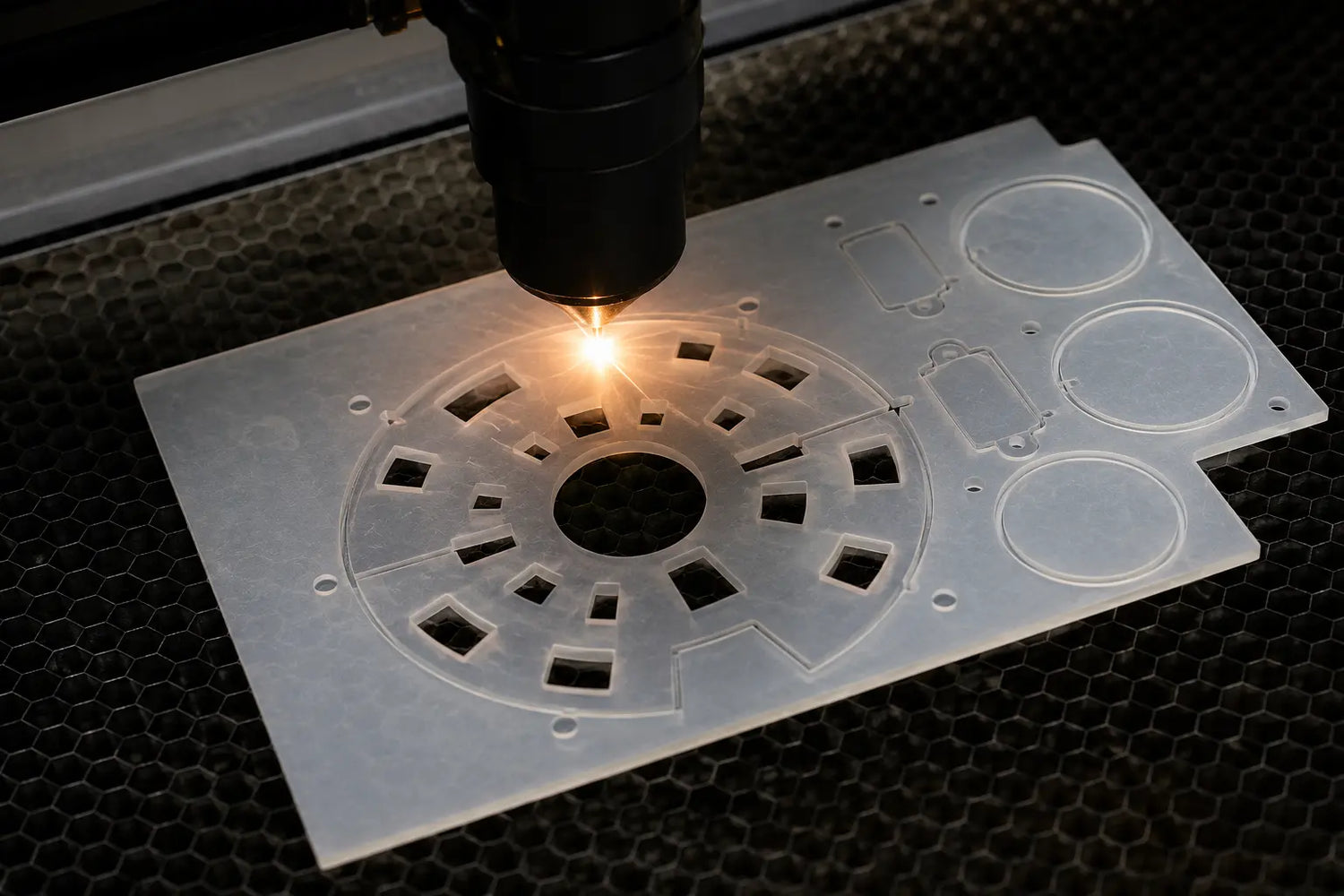
Mica is a unique, naturally occurring mineral known for its high heat resistance, electrical insulation properties, and smooth surface. It’s commonly used in the electronics, aerospace, and craft industries. However, when it comes to cutting mica sheets—especially thin ones like 0.1mm to 0.5mm—not all cutting methods are created equal.
In this blog, we’ll explore the best practices for mica cutting, the challenges involved, and why laser technology—particularly UV lasers—is often the best solution.
What Makes Mica Challenging to Cut?
Mica’s layered, brittle structure means it can easily crack or flake during mechanical cutting. Traditional tools like scissors, knives, or CNC blades may damage the material or fail to deliver clean edges—especially at very thin thicknesses.
Moreover, mica is resistant to infrared wavelengths, such as those used in CO₂ lasers, making it difficult to cut cleanly with standard laser engravers.
Why UV Lasers Are Ideal for Mica
UV lasers (wavelength: 355nm) provide what is known as “cold processing.” Unlike CO₂ or fiber lasers, UV lasers don’t rely on thermal energy alone. Instead, they use short wavelengths that are highly absorbed by non-metallic materials like mica, enabling:
-
Precise and clean cuts without burning or charring
-
Minimal thermal damage to the edges
-
High-speed processing even for ultra-thin sheets
-
Less delamination or flaking
This makes UV lasers the top choice for professionals working with mica in electronics, gaskets, and insulation parts.
Can CO₂ or Fiber Lasers Cut Mica?
CO₂ lasers (10.6μm) are generally not recommended for mica, especially thin sheets, due to poor absorption and high risk of burning or cracking.
Fiber lasers (1064nm) work better for metals and are also not ideal for mica.
If you already own a diode or CO₂ laser, you may be able to mark mica (not cut), but results will be inconsistent.
Tips for Successful Mica Cutting
If you’re working with mica regularly, here are a few expert tips:
-
Choose UV laser engraving machines with adjustable power (3W–5W is ideal)
-
Use a fine-focus lens to concentrate energy precisely
-
Adjust cutting speed to prevent heat buildup
-
Ensure the mica sheet is flat and supported to avoid vibration
-
For mass production, consider using automated feeding tables or jigs
Looking for the Right Machine to Cut Mica?
At Carverall, we offer advanced UV laser machines and fiber laser options tailored for precise, high-speed engraving and cutting. Our latest models like the Z2 Fiber Laser (for metal) and upcoming UV laser systems are ideal for professionals in electronics, crafts, and custom fabrication.
Need help choosing the right model? Contact us—we’re happy to help.
Conclusion
Cutting mica can be tricky, but with the right laser technology—particularly UV laser systems—you can achieve clean, accurate results with minimal material damage. Whether you're creating precision insulation components or custom crafts, investing in the right tools makes all the difference.


